
Background
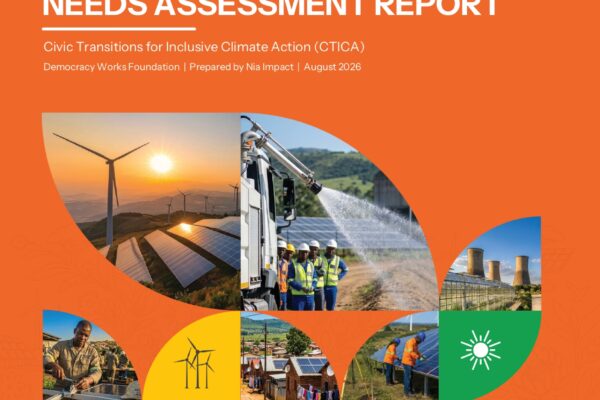
Civic Transitions for Inclusive Climate Action (CTICA) is a European Union-funded project implemented by Democracy Works Foundation (DWF) under its Climate, Environment, and Resource Governance (CERG) Programme. The project strengthens inclusive climate and energy governance by building the capacity of community-based organisations (CBOs), municipalities and Independent Power Producers (IPPs) to participate meaningfully in the Just Energy Transition (JET).
Climate literacy provides an essential foundation for informed community participation. The proposed training will help CBO representatives understand climate change, recognise its implications for their communities and connect climate considerations with their organisations’ existing work.
Purpose and Objectives
The training aims to strengthen CBO representatives’ understanding of climate change and their confidence in communicating its relevance to the communities they represent.
Drawing on the climate literacy components of the CTICA curriculum, the objectives are to:
- Build understanding of climate change, including its causes, the role of greenhouse gases and the relationship between fossil fuel use and global warming.
- Identify local climate impacts and their implications for livelihoods, health, water, food security and community wellbeing.
- Distinguish between climate change adaptation and mitigation, using practical community examples.
- Introduce renewable energy and explain its relationship with climate change mitigation and the Just Energy Transition.
- Explore climate justice, including why climate impacts and transition risks affect different groups unequally.
- Help participants identify ways to incorporate climate awareness into their organisations’ activities and share learning within their communities.
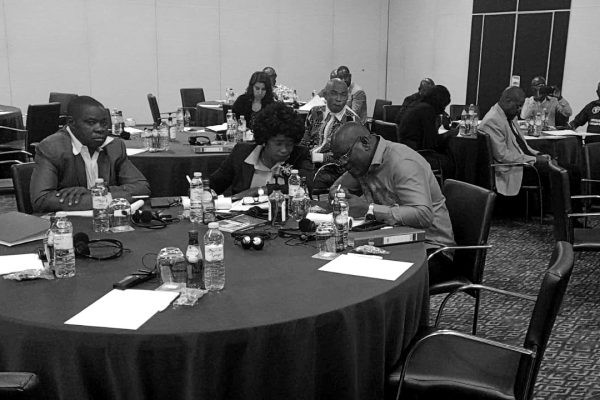
Delivery will use participatory exercises, local examples, group discussions and reflection. Facilitation will accommodate different literacy levels and encourage meaningful participation by women, young people, persons with disabilities and other marginalised groups.
Key Outputs
- 72 individuals from 36 CBOs trained in climate literacy, with two representatives per organisation.
- One consolidated workshop report documenting delivery across the six municipal areas, participation, learning outcomes, evaluation findings and recommended follow-up actions.
Workshop Details
Six workshops will take place between 23 November and 4 December 2026. Each workshop will accommodate 12 participants representing six CBOs and will be delivered by two facilitators: one from DWF and one from the facilitator roster.
The literacy workshops will run from November to December 2026, in the following target municipalities:
| Tuesday, 24 November 2026 | Mpumalanga | eMalahleni Local Municipality |
| Thursday, 26 November 2026 | Mpumalanga | Steve Tshwete Local Municipality |
| Tuesday, 1 December 2026 | Gauteng | Rand West City Local Municipality |
| Tuesday, 1 December 2026 | Limpopo | Lephalale Local Municipality |
| Thursday, 3 December 2026 | Gauteng | City of Johannesburg Metropolitan Municipality |
| Thursday, 3 December 2026 | Limpopo | Sekhukhune |