Advancing inclusive climate, energy, and resource governance across Southern Africa
The Climate, Energy, and Resource Governance (CERG) Programme works to strengthen transparent, accountable, and inclusive governance of climate, energy, and natural resource decisions at local, national, and regional levels across Southern Africa. The programme approaches climate change as a governance and development challenge that calls for coordinated action across sectors and levels of government. It is committed to systemic change that embeds the meaningful inclusion of local communities and vulnerable groups in decision-making, fosters inclusive development through responsible mineral exploitation, and enhances access to energy, so that the region’s transition to a low-carbon economy delivers tangible benefits for the communities closest to its impacts.
Principles of Climate and Energy Democracy
The CERG Programme is guided by four principles that shape its project design, strategic partnerships, and engagement with communities and institutions across Southern Africa. These principles include:
1. Integrating adaptation into the Just Energy Transition (JET)
Every mitigation investment, whether public or private, should support or unlock resources for local adaptation and resilience.
The energy transition cannot succeed without simultaneously building resilience to climate shocks, especially for vulnerable and underserved communities. While investments in renewable energy, green hydrogen, and electric vehicles are critical to achieving mitigation goals, they often overlook local adaptation needs such as food security, water access, and disaster preparedness. The programme therefore supports a twin-track approach in which mitigation spending either directly funds or mobilises additional resources for community-level adaptation, so that local communities across Southern Africa share in the benefits of the transition.
2. Strengthening local governance and responsible resource management
Local governance is at the frontline of climate impacts and natural resource management, and it should therefore be supported to lead mitigation and adaptation efforts.
Local governments are increasingly tasked with setting and delivering on climate change mandates. However, governance decentralisation in many African countries has not been coupled with meaningful capacity development and resourcing. For climate and resource policy to be effective, it must be anchored in the statutory planning systems that govern land use, service delivery, budgeting, and infrastructure decisions. The programme also supports responsible mineral exploitation, anchored in sound regulation, secure land rights, and accountable benefit-sharing, so that mining and energy development deliver lasting benefits for host communities.
3. Inclusive and equitable development
Addressing gender, youth, and spatial inequities alongside climate change delivers more durable systemic change and stronger social and economic returns on development investment.
Climate change magnifies existing inequalities. Women, youth, informal workers, rural communities, and people living with disabilities often face the harshest impacts yet have the least voice in decision-making. At the same time, they possess critical knowledge, networks, and capabilities essential to building resilient systems. By recognising and addressing how multiple forms of marginalisation interact, the programme builds more inclusive governance processes and draws on the knowledge, innovation, and participation of the communities most affected.
4. Strength in partnership
Collective platforms that link civil society, all tiers of government, and business are essential for scale and legitimacy.
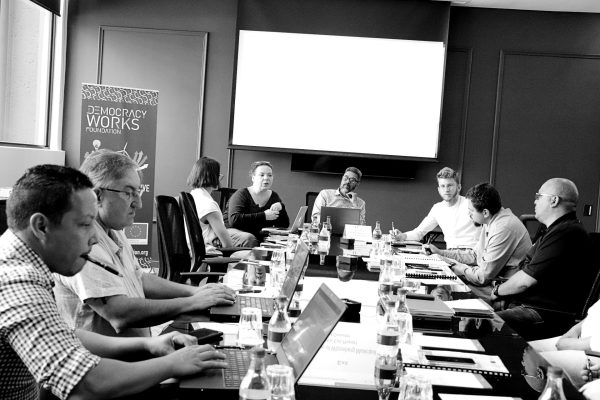
No single actor can address these challenges alone. Collective models that bring diverse stakeholders together under shared goals are essential to achieving lasting outcomes at scale. The CERG Programme prioritises structured collaboration and mutual accountability across sectors, fostering multi-stakeholder platforms such as steering committees that link municipalities, civil society, and the private sector, open data forums, and climate dialogue roundtables to build trust, align efforts, and pool resources.
Projects:
Civic Transitions for Inclusive Climate Action (CTICA) →
Climate for Growth (CfG) →
Fostering Inclusive Growth through Climate Change Champions (FIGCCC) →
G20 Engagements Plan →