As South Africa heads towards the 2026 local government elections, coalition politics is no longer an exception. It is increasingly becoming part of how our democracy works. The question is no longer simply whether coalitions work, but how political parties, institutions and citizens adapt to this evolving political landscape.
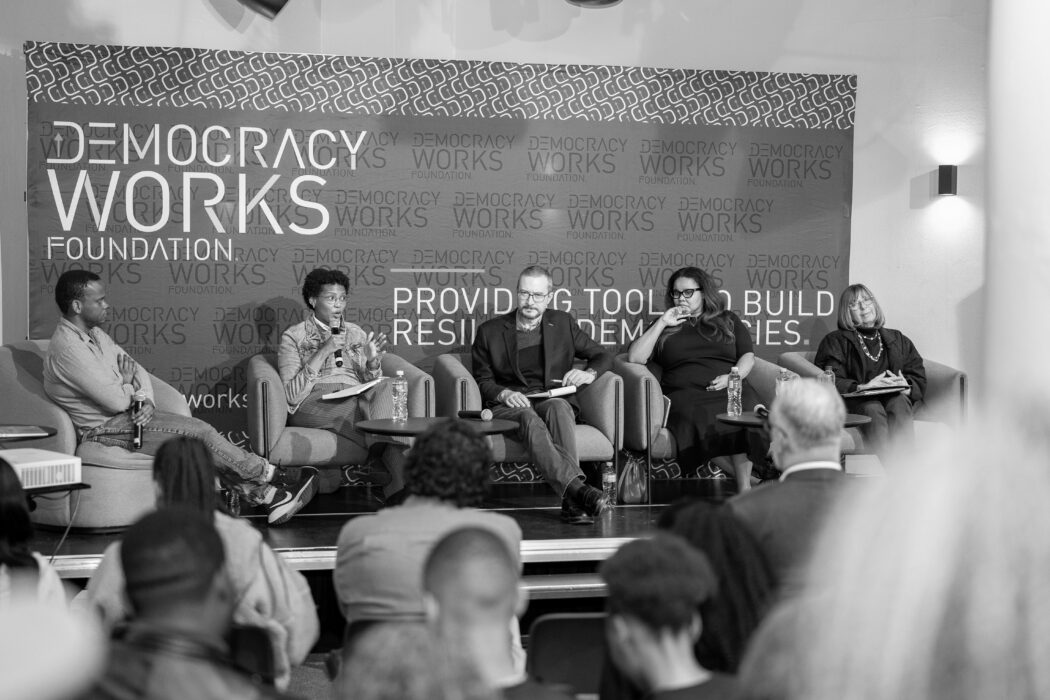
This was at the centre of Democracy Works Foundation’s (DWF) latest Cool Politics Café, held on 1 October 2026 at the Market Theatre in Johannesburg under the theme, Coalition Politics: Reflecting on South Africa’s Evolving Political Landscape. The dialogue brought together an intergenerational audience of students, civil servants, professionals, civil society organisations and active citizens to unpack what coalition governance means for South Africa’s democracy.
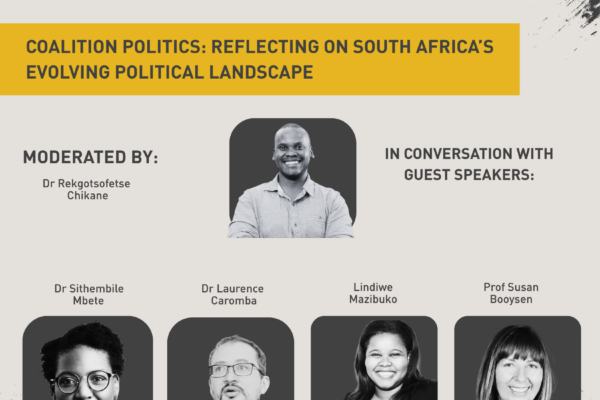
Moderated by Dr Rekgotsofetse Chikane, the panel featured Prof Susan Booysen of the Wits School of Governance, Dr Sithembile Mbete of the Public Affairs Research Institute (PARI), Dr Laurence Caromba of the Mapungubwe Institute for Strategic Reflection (MISTRA), and Ms Lindiwe Mazibuko, founder of Futurelect.
Coalition governance is becoming a significant feature of South African politics. MISTRA’s Coalitions Barometer recorded an increase from approximately 27 hung municipalities, where no party achieved a majority of the vote, after the 2016 local government elections to around 70 after the 2021 elections. Its latest Barometer examines approximately 80 local governments and coalition arrangements at the national and provincial levels.
Dr Chikane argued that while citizens’ political choices have evolved, political parties have not necessarily developed the same culture of cooperation. “The problem is that the political parties don’t have that culture. They have not evolved with democracy as citizens have evolved their tastes in parties.” The real test, he argued, is whether political parties can learn to govern together rather than simply govern to win.
But who leads when nobody wins outright?
This question generated some of the most interesting exchanges of the evening. Audience members raised concerns about too many political actors, or “cooks,” attempting to lead the same government. Without a clear winner, who ultimately takes responsibility when things go wrong?
One participant questioned whether multiple centres of leadership risks creating confusion and weakening accountability. A public servant brought the issue closer to the practical realities of government: what happens to officials responsible for delivering services when political leadership and priorities repeatedly change due to instable coalitions?
The panel did not dismiss these concerns. Rather, the discussion highlighted the need to distinguish between shared governance and the absence of leadership.
Ms Mazibuko reflected that coalition governance reflects the choices citizens themselves are making. “Coalitions are a product of the will of the voters.” For her, having several parties in government does not remove the need or ability for leadership or accountability. Coalition partners need clear agreements setting out what the government collectively intends to deliver, rather than agreements centred primarily on who receives which position.
Dr Caromba similarly made a case for greater transparency. “I think that the voters deserve to know.” Citizens should know who is governing together, on what terms and who should ultimately be held accountable.
Prof Booysen described the shift away from single-party dominance as a second major political transition for South Africa. MISTRA’s Coalitions Barometer similarly finds that coalition politics has become part of a broader transition away from three decades of majoritarian government, although coalition municipalities have experienced additional political stalemates and distractions from service delivery.
These concerns also come as Parliament considers the Local Government: Municipal Structures Amendment Bill, 2026, referred to as the Coalitions Bill, which seeks to introduce greater structure and stability to coalition governance. Prof Booysen and Dr Mbete cautioned against treating legislation as a solution, arguing that the Bill risks “bringing a technical solution to a political problem.” While clearer rules and formal coalition agreements may strengthen accountability, the deeper challenge remains political: whether parties can develop a culture of negotiation, compromise and collective vision for governance. This reflects Dr Mbete’s broader position that technical reforms alone cannot resolve problems rooted in South Africa’s political culture. The discussion highlighted that legislation alone cannot resolve the political culture underpinning unstable coalitions. As several panellists argued, rules can create a framework for cooperation, but political parties must still learn to negotiate, compromise, and govern collectively in the interests of citizens.
More choice, but are citizens checking out?
Another dimension discussed in the conversation was voter participation. South Africa has historically stood out for the significant number of poorer citizens who participated in elections. But declining turnout suggests that this relationship with electoral democracy is changing. Turnout fell dramatically to 45.86% in the 2021 local government elections, compared with 57.97% in 2016 (IEC 2021 National Voter Turnout Report). This creates an important democratic paradox. South Africans have more political choices, while fewer voters appear willing to give one party an outright mandate. Yet having more choice does not automatically translate into greater participation or confidence in democracy.
One audience member captured the dilemma simply: “How do we encourage the discouraged?” Another young participant, drawing from his experience in student governance, argued that young people need to learn how to work across political differences and prioritise service delivery over party politics.
These questions demonstrate why DWF hosts the Cool Politics Café. Dialogue is one of the tools DWF uses to strengthen resilient democracies by creating non-partisan spaces where citizens can interrogate political developments, listen across differences and engage directly with researchers, practitioners, politicians and each other.
As DWF’s Patience Hwenha said in welcoming participants, the intention is not to sit back and complain about politics: “We want to add our voice.”
DWF Executive Director Olmo von Meijenfeldt closed with an equally important reminder: “Democracy is not only about elections. It’s about the time in between. It is about strengthening participatory political culture and a culture of compromise and collaboration, away from zero-sum and big-man politics.”
As coalition politics becomes more prominent, the challenge therefore extends beyond who wins an election. It is about how power is shared, how political visions are combined into consensus agendas for governance, how governments remain accountable, and whether citizens continue to believe that participating in democracy is essential.